
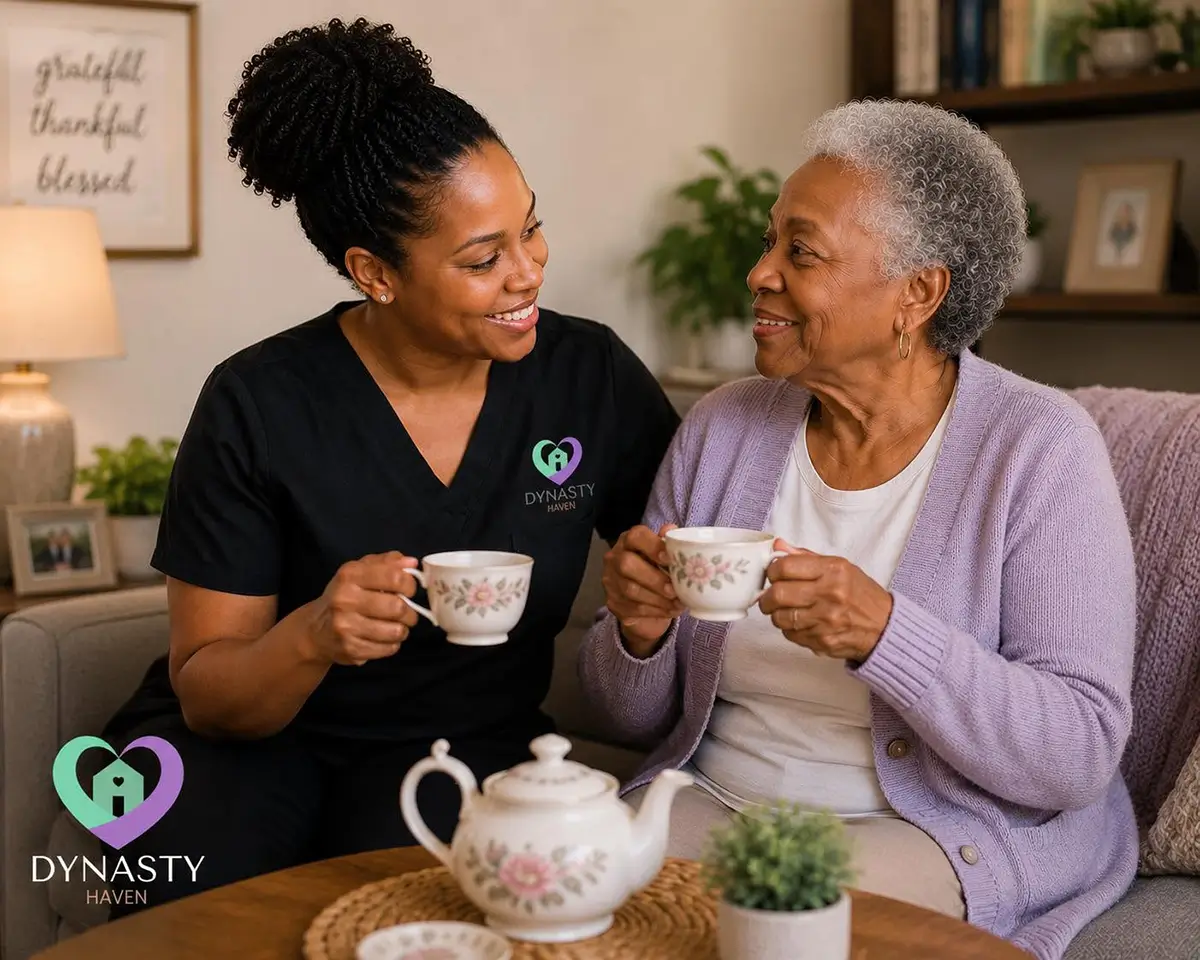

Comfort, Dignity, and Compassionate Support for You and Your Loved Ones
- Personalized End-of-Life Support shaped around individual needs, wishes, and preferences.
- Compassionate, Consistent Caregivers offering respectful assistance and meaningful companionship.
- Support for Families that helps ease everyday responsibilities and creates more time for meaningful moments together.
Personalized End-of-Life Care in Bloomington, Indiana
When someone you love is living with a life-limiting illness, comfort, dignity, and quality of life become especially important. Many individuals wish to remain in the familiarity of their own homes, surrounded by the people, belongings, and routines that bring them comfort.
Dynasty Haven helps Bloomington-area families explore personalized in-home support during this sensitive time. Our approach emphasizes compassion, respect, and attention to each person’s wishes, while recognizing the emotional needs of both the individual receiving care and their loved ones.
Every family’s circumstances are different. Support may involve assistance with everyday activities, companionship, help maintaining a comfortable home environment, or respite for family caregivers. Care arrangements should reflect the individual’s preferences and be coordinated with appropriate healthcare professionals when medical or hospice services are needed.
End-of-life care is about more than meeting daily needs. It’s about preserving dignity, honoring personal wishes, and helping families make the most of the time they share.
End-of-Life Care at Home: What Support May Include
Personalized end-of-life support can help individuals remain comfortable at home while giving family members additional assistance with daily responsibilities. Depending on the services offered and the individual’s care plan, support may include:
- Assistance With Daily Activities: Respectful help with appropriate everyday tasks and personal routines.
- Companionship and Emotional Support: A reassuring presence, conversation, and time spent together in ways that reflect the individual’s preferences.
- Meal Preparation: Help preparing meals and snacks according to personal preferences and any relevant dietary guidance.
- Light Household Assistance: Help with appropriate household tasks, laundry, and keeping frequently used spaces comfortable.
- Personal Care Assistance: Support with activities such as dressing, grooming, and bathing when these services are available and appropriate.
- Family Caregiver Respite: Scheduled assistance that allows family members to rest, attend appointments, or take care of other responsibilities.
- Coordination With Healthcare Providers: Communication and coordination with the individual’s healthcare team, when appropriate and authorized, to help ensure that nonmedical support complements the overall care plan.
The level of support can be reviewed as needs change. Medical treatment, clinical assessments, and specialized symptom or pain management should be provided by appropriately qualified healthcare professionals.
End-of-Life Support for Different Health Conditions
Every person’s experience with a life-limiting illness is different. The right support depends on their condition, personal wishes, comfort needs, and the recommendations of their healthcare team.
Dynasty Haven can discuss available in-home support options with families caring for loved ones experiencing conditions such as:
- Cancer: Assistance with daily activities and companionship alongside medical care provided by qualified professionals.
- Advanced Dementia: Familiar routines, respectful assistance, and companionship tailored to the individual’s abilities and needs.
- Chronic or Progressive Illnesses: Additional everyday support as mobility, energy, or independence changes.
- Complex Care Needs: Help identifying appropriate services and determining whether additional skilled medical care or specialized equipment support is necessary.

Emotional Support and Companionship During End-of-Life Care
A life-limiting illness can affect emotional well-being as much as physical comfort. Individuals may experience fear, uncertainty, loneliness, or changes in their ability to participate in activities they once enjoyed.
Compassionate companionship can provide opportunities for conversation, reflection, familiar activities, and meaningful time together. Support should always respect the person’s wishes, cultural preferences, privacy, and dignity.
For families, having additional help with everyday responsibilities may reduce some of the pressure of caregiving and make more time available for connection and shared moments.
Support for Families and Family Caregivers
Caring for someone nearing the end of life can be emotionally demanding. Family members may be balancing caregiving responsibilities with work, household tasks, and their own emotional needs.
Depending on the services available, in-home support may help with daily routines, light household tasks, meal preparation, companionship, and respite. Families may also benefit from guidance on connecting with hospice providers, healthcare professionals, counseling services, and bereavement resources.
Dynasty Haven encourages families to discuss their needs openly so they can explore appropriate support options and understand what assistance may be available.
Discuss End-of-Life Care Options With Dynasty Haven
Choosing care for someone with a life-limiting illness is a deeply personal decision. Families deserve clear information, compassionate communication, and support that respects their loved one’s wishes.
If you’re exploring end-of-life care at home in Bloomington, Indiana, contact Dynasty Haven to discuss your circumstances, learn about available services, and determine whether its in-home support options are appropriate for your family.
When hospice or skilled medical care is needed, Dynasty Haven’s nonmedical support, if applicable, should complement rather than replace services provided by qualified healthcare professionals.